


Background: Most studies on stroke have been designed to examine one deficit in isolation; yet, survivors often have multiple deficits in different domains. While the mechanisms underlying multiple-domain deficits remain poorly understood, network-theoretical methods may open new avenues of understanding. Methods: Fifty subacute stroke patients (7±3days poststroke) underwent diffusion-weighted magnetic resonance imaging and a battery of clinical tests of motor and cognitive functions. We defined indices of impairment in strength, dexterity, and attention. We also computed imaging-based probabilistic tractography and whole-brain connectomes. To efficiently integrate inputs from different sources, brain networks rely on a rich-club of a few hub nodes. Lesions harm efficiency, particularly when they target the rich-club. Overlaying individual lesion masks onto the tractograms enabled us to split the connectomes into their affected and unaffected parts and associate them to impairment. Results: We computed efficiency of the unaffected connectome and found it was more strongly correlated to impairment in strength, dexterity, and attention than efficiency of the total connectome. The magnitude of the correlation between efficiency and impairment followed the order attention>dexterity ≈ strength (strength: | r |=.03, P =0.02, dexterity: | r |=.30, P =0.05, attention: | r |=.55, P <0.001). Network weights associated with the rich-club were more strongly correlated to efficiency than non-rich-club weights. Conclusions: Attentional impairment is more sensitive to disruption of coordinated networks between brain regions than motor impairment, which is sensitive to disruption of localized networks. Providing more accurate reflections of actually functioning parts of the network enables the incorporation of information about the impact of brain lesions on connectomics contributing to a better understanding of underlying stroke mechanisms.
Publication scientifique
Differential Impact of Brain Network Efficiency on Poststroke Motor and Attentional Deficits
Autres publications de la plateforme
The nutritional and metabolic impact of night shift work in a...
Jassil, Friedrich C.; Phillips, Nicholas E.; Hemmer, Alexandra; Joris, Céline; Biancolin, Andrew D.; Hartmeyer, Steffen L.; Dorribo, Victor; Perrig, Stephen; Genton, Laurence; Sterpenich, Virginie; Salathé, Marcel; Pralong, Jacques A.; Andersen, Marilyne; Pichard, Claude; Dibner, Charna; Collet, Tinh-Hai
npj Biological Timing and Sleep
Age and gender-related neurophysiological changes in sleep and wake states during...
Mammeri, Kevin; Legendre, Guillaume; Journal, Fiona; Fernandez, Nathalie; Ruppen-Maret, Helene; Combey, Joanny; Schwartz, Sophie; Sterpenich, Virginie
Developmental Cognitive Neuroscience
Multivariate deep phenotyping reveals behavioral correlates of non-restorative sleep in 22q11.2...
Reich, Natacha; Imparato, Andrea; Cataldi, Jacinthe; Thillainathan, Niveettha; Delavari, Farnaz; Schneider, Maude; Eliez, Stephan; Siclari, Francesca; Sandini, Corrado
Psychiatry Research
Impact of spindle-inspired transcranial alternating current stimulation during a nap on...
Moyne, Maëva; Durand-Ruel, Manon; Park, Chang-Hyun; Salamanca-Giron, Roberto; Sterpenich, Virgine; Schwartz, Sophie; Hummel, Friedhelm C; Morishita, Takuya
Sleep Advances
Exploring the Long‐Lasting Effect of Mindfulness‐Based Intervention in Very Preterm Adolescents...
Siffredi, Vanessa; Liverani, Maria Chiara; Fernandez, Natalia B.; Hüppi, Petra Susan; Borradori Tolsa, Cristina; Ha‐Vinh Leuchter, Russia
Child: Care, Health and Development
The cathartic dream: Using a large language model to study a...
Perogamvros, Lampros; Rochas, Vincent; Beau, Jean‐Baptiste; Sterpenich, Virginie; Bayer, Laurence
Journal of Sleep Research
Journal de publication
Stroke
Auteurs:
Evangelista, Giorgia G.; Egger, Philip; Brügger, Julia; Beanato, Elena; Koch, Philipp J.; Ceroni, Martino; Fleury, Lisa; Cadic-Melchior, Andéol; Meyer, Nathalie H.; Rodríguez, Diego De León; Girard, Gabriel; Léger, Bertrand; Turlan, Jean-Luc; Mühl, Andreas; Vuadens, Philippe; Adolphsen, Jan; Jagella, Caroline E.; Constantin, Christophe; Alvarez, Vincent; San Millán, Diego; Bonvin, Christophe; Morishita, Takuya; Wessel, Maximilian J.; Van De Ville, Dimitri; Hummel, Friedhelm C.
Date de publication:
Plateforme:
Études récentes de la plateforme
Psychothérapie pour soigner les déficits de motivation
Une approche psychothérapeutique
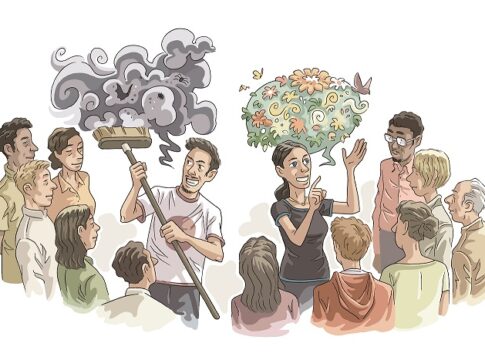
Révéler les mécanismes neuronaux de la psychothérapie pour le traitement des symptômes négatifs
Les recherches cliniques suggèrent que des interventions psychothérapeutiques ciblant...
Analyse géospatiale des traumatismes crâniens à Genève
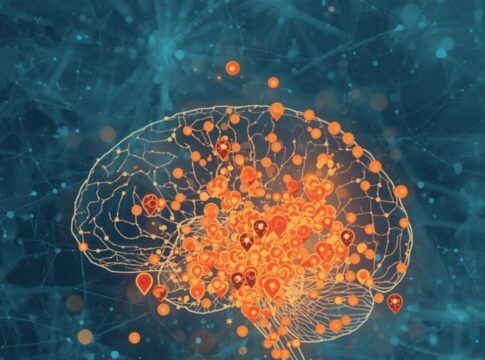
Cartographie des données pour une prévention territoriale
Tranformer des données venant des hôpitaux publics jusqu'à des informations territoriales exploitables
À partir des données anonymisées recueillies...

Combattre les traumatismes dus aux sports
Comprendre les comportements liés aux commotions cérébrales
Développer un outil pour évaluer les connaissances, les attitudes et les comportements dans le sport
Le projet TraumaSport-GE...