ABSTRACT The thalamus is organized into nuclei that have distinct input and output connectivities with the cortex. Whereas first-order (FO) nuclei – also called core nuclei – relay input from sensory organs on the body surface and project to primary cortical sensory areas, higher-order (HO) nuclei – matrix nuclei – instead receive their driver input from the cortex and project to secondary and associative areas within cortico-thalamo-cortical loops. Input-dependent processes have been shown to play a crucial role in the emergence of FO thalamic neuron identity from a ground-state HO neuron identity, yet how this identity emerges during development remains unknown. Here, using single-cell RNA sequencing of the developing mouse embryonic thalamus, we show that, although they are born together, HO neurons start differentiating earlier than FO neurons. Within the FO visual thalamus, postnatal peripheral input is crucial for the maturation of excitatory, but not inhibitory, neurons. Our findings reveal different differentiation tempos and input sensitivities of HO and FO neurons, and highlight neuron type-specific molecular differentiation programs in the developing thalamus.
Publication scientifique
Developmental emergence of first- and higher-order thalamic neuron molecular identities
Autres publications de la plateforme
Mosaic human cortical organoids model mTOR-related focal cortical dysplasia through DEPDC5...
Maletic, Marina; Bizzotto, Sara; Ribierre, Théo; Guerdoud, Kenza; Raoux, Corentin; Doladilhe, Marion; Dalle, Carine; Picard, Fabienne; Baulac, Stéphanie
Brain
Dual lineage origins contribute to neocortical astrocyte diversity
Zhou, Jiafeng; Vitali, Ilaria; Roig-Puiggros, Sergi; Javed, Awais; Cantando, Iva; Puglisi, Matteo; Bezzi, Paola; Jabaudon, Denis; Mayer, Christian; Bocchi, Riccardo
Nature Communications
Regional differences in progenitor metabolism shape brain growth during development
Baumann, Natalia; Wagener, Robin J.; Javed, Awais; Conti, Eleonora; Abe, Philipp; Lopes, Andrea; Sansevrino, Roberto; Lavalley, Adrien; Magrinelli, Elia; Szalai, Timea; Fuciec, Daniel; Ferreira, Clothilde; Fièvre, Sabine; Fouassier, Andreane; D’Amico, Davide; Harschnitz, Oliver; Jabaudon, Denis
Cell
Single-cell genotyping and transcriptomic profiling of mosaic focal cortical dysplasia
Baldassari, Sara; Klingler, Esther; Teijeiro, Lucia Gomez; Doladilhe, Marion; Raoux, Corentin; Roig-Puiggros, Sergi; Bizzotto, Sara; Couturier, Jeanne; Gilbert, Alice; Sami, Lina; Ribierre, Théo; Aronica, Eleonora; Adle-Biassette, Homa; Chipaux, Mathilde; Jabaudon, Denis; Baulac, Stéphanie
Nature Neuroscience
Du mosaïcisme cérébral aux crises d’épilepsie: Une nouvelle stratégie thérapeutique ciblée
Ribierre, Théo; Baulac, Stéphanie
médecine/sciences
Molecular programs guiding arealization of descending cortical pathways
Abe, Philipp; Lavalley, Adrien; Morassut, Ilaria; Santinha, Antonio J.; Roig-Puiggros, Sergi; Javed, Awais; Klingler, Esther; Baumann, Natalia; Prados, Julien; Platt, Randall J.; Jabaudon, Denis
Nature
Journal de publication
Development
Auteurs:
Lo Giudice, Quentin; Wagener, Robin J.; Abe, Philipp; Frangeul, Laura; Jabaudon, Denis
Date de publication:
Plateforme:
Études récentes de la plateforme
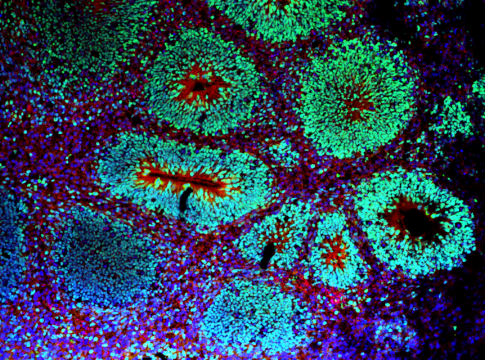
Reprogrammer des cellules humaines pour étudier les défauts du cerveau
Organoïdes cérébraux pour les troubles mentaux
Nous utilisons une approche appelée organoïdes cérébraux (« cerveau dans une boîte de Petri ») qui permet de...
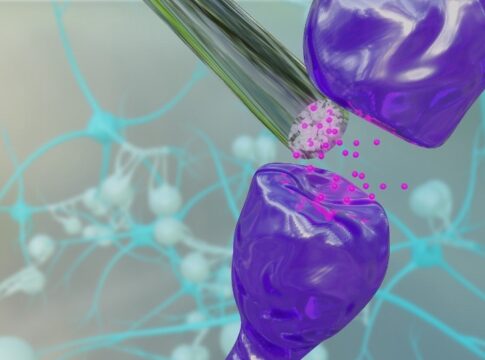
Suivi de la dopamine dans la maladie de Parkinson
Détection de la dopamine grâce à des biosenseurs à base d’ADN
Une approche innovante utilise des brins d’ADN artificiellement conçus, appelés aptamères, qui capturent...
Suivre la trace des biomarqueurs sanguins de la maladie d’Alzheimer
Réinventer le diagnostic de la maladie d'Alzheimer
La maladie d’Alzheimer se développe des décennies avant l’apparition des symptômes.
Des recherches récentes suggèrent que le risque...