

Background: Most studies on stroke have been designed to examine one deficit in isolation; yet, survivors often have multiple deficits in different domains. While the mechanisms underlying multiple-domain deficits remain poorly understood, network-theoretical methods may open new avenues of understanding. Methods: Fifty subacute stroke patients (7±3days poststroke) underwent diffusion-weighted magnetic resonance imaging and a battery of clinical tests of motor and cognitive functions. We defined indices of impairment in strength, dexterity, and attention. We also computed imaging-based probabilistic tractography and whole-brain connectomes. To efficiently integrate inputs from different sources, brain networks rely on a rich-club of a few hub nodes. Lesions harm efficiency, particularly when they target the rich-club. Overlaying individual lesion masks onto the tractograms enabled us to split the connectomes into their affected and unaffected parts and associate them to impairment. Results: We computed efficiency of the unaffected connectome and found it was more strongly correlated to impairment in strength, dexterity, and attention than efficiency of the total connectome. The magnitude of the correlation between efficiency and impairment followed the order attention>dexterity ≈ strength (strength: | r |=.03, P =0.02, dexterity: | r |=.30, P =0.05, attention: | r |=.55, P <0.001). Network weights associated with the rich-club were more strongly correlated to efficiency than non-rich-club weights. Conclusions: Attentional impairment is more sensitive to disruption of coordinated networks between brain regions than motor impairment, which is sensitive to disruption of localized networks. Providing more accurate reflections of actually functioning parts of the network enables the incorporation of information about the impact of brain lesions on connectomics contributing to a better understanding of underlying stroke mechanisms.
Publication scientifique
Differential Impact of Brain Network Efficiency on Poststroke Motor and Attentional Deficits
Autres publications de la plateforme
Characterising the Diffusion Functional Signature of Negative BOLD With Interleaved TMS...
De Riedmatten, Inès; Spencer, Arthur P. C.; Martuzzi, Roberto; Rochas, Vincent; Pérot, Jean‐Baptiste; Szczepankiewicz, Filip; Jelescu, Ileana O.
Human Brain Mapping
Aberrant cerebrovascular reactivity presents as an early biomarker of psychosis susceptibility...
Delavari, Farnaz; Moia, Stefano; Forrer, Silas; Sandini, Corrado; Kojovic, Nada; Pascucci, Alessandro; Lacour, Clémence; Eliez, Stephan; Van De Ville, Dimitri
Translational Psychiatry
Real-time reinforcement for human-machine interface control
Vassiliadis, Pierre; Pinheiro, Daniel Leal; Fleury, Lisa; Zenon, Alexandre; Esparza-Iaizzo, Martín; Ingster, Abigaïl; Micera, Silvestro; Shokur, Solaiman; Hummel, Friedhelm C.
Neuron
Developmental Alterations in the Diffusion Tensor Imaging Analysis Along the Perivascular...
Pascucci, Alessandro; Forrer, Silas; Sandini, Corrado; Mancini, Valentina; Alemán-Gómez, Yasser; Eliez, Stephan; Delavari, Farnaz
Biological Psychiatry Global Open Science
How Much Does Motion Matter? Evaluating the Motion Robustness of pTx...
Philippe, Jocelyn; Pato Montemayor, Natalia; Romanin, Ludovica; Sleight, Emilie; Klauser, Antoine; Di Noto, Tommaso; Bacha, Lina; Maréchal, Bénédicte; Herrler, Jürgen; Liebig, Patrick A.; Heidemann, Robin M.; Thiran, Jean‐Philippe; Hilbert, Tom; Piredda, Gian Franco; Yu, Thomas
Magnetic Resonance in Medicine
Linguistic pitch is hierarchically encoded in the right ventral stream
Oderbolz, Chantal; Orpella, Joan; Meyer, Martin
Communications Biology
Journal de publication
Stroke
Auteurs:
Evangelista, Giorgia G.; Egger, Philip; Brügger, Julia; Beanato, Elena; Koch, Philipp J.; Ceroni, Martino; Fleury, Lisa; Cadic-Melchior, Andéol; Meyer, Nathalie H.; Rodríguez, Diego De León; Girard, Gabriel; Léger, Bertrand; Turlan, Jean-Luc; Mühl, Andreas; Vuadens, Philippe; Adolphsen, Jan; Jagella, Caroline E.; Constantin, Christophe; Alvarez, Vincent; San Millán, Diego; Bonvin, Christophe; Morishita, Takuya; Wessel, Maximilian J.; Van De Ville, Dimitri; Hummel, Friedhelm C.
Date de publication:
Plateforme:
Études récentes de la plateforme
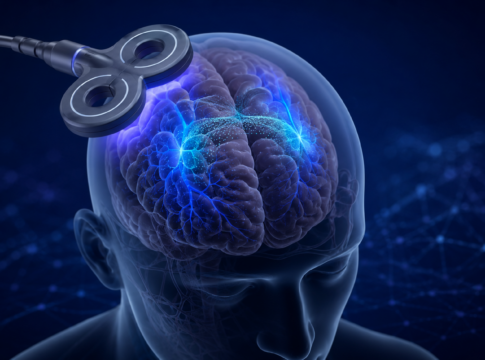
Quand le cerveau s’éteint à l’IRM : un signal plus complexe...
Quand une diminution du signal reste difficile à interpréter
L’imagerie par résonance magnétique fonctionnelle (IRMf) permet de repérer les régions du cerveau qui réagissent...
La connaissance comme récompense
Comparaison de différents types de récompenses
Les participants prennent part à une tâche comprenant trois types de récompenses, de valeur élevée ou faible :
-...
Réseaux cérébraux de la mémoire dans l’épilepsie
Cartographie multimodale des réseaux cérébraux
Combinaison de l'EEG, de l'IRM à champ ultra-élevé et de modèles animaux
Ce projet vise à identifier les marqueurs...