

Abstract Motor skill learning is a crucial process at all ages. However, healthy aging is often accompanied by a reduction in motor learning capabilities. This study characterized the brain dynamics of healthy older adults during motor skill acquisition and identified brain regions associated with changes in different components of performance. Forty-three subjects participated in a functional magnetic resonance imaging study during which they learned a sequential grip force modulation task. We evaluated the continuous changes in brain activation during practice as well as the continuous performance-related changes in brain activation. Practice of the motor skill was accompanied by increased activation in secondary motor and associative areas. In contrast, visual and frontal areas were less recruited as task execution progressed. Subjects showed significant improvements on the motor skill. While faster execution relied on parietal areas and was inversely associated with frontal activation, accuracy was related to activation in primary and secondary motor areas. Better performance was achieved by the contribution of parietal regions responsible for efficient visuomotor processing and cortical motor regions involved in the correct action selection. The results add to the understanding of online motor learning in healthy older adults, showing complementary roles of specific networks for implementing changes in precision and speed.
Publication scientifique
Early motor skill acquisition in healthy older adults: brain correlates of the learning process
Autres publications de la plateforme
Characterising the Diffusion Functional Signature of Negative BOLD With Interleaved TMS...
De Riedmatten, Inès; Spencer, Arthur P. C.; Martuzzi, Roberto; Rochas, Vincent; Pérot, Jean‐Baptiste; Szczepankiewicz, Filip; Jelescu, Ileana O.
Human Brain Mapping
Aberrant cerebrovascular reactivity presents as an early biomarker of psychosis susceptibility...
Delavari, Farnaz; Moia, Stefano; Forrer, Silas; Sandini, Corrado; Kojovic, Nada; Pascucci, Alessandro; Lacour, Clémence; Eliez, Stephan; Van De Ville, Dimitri
Translational Psychiatry
Real-time reinforcement for human-machine interface control
Vassiliadis, Pierre; Pinheiro, Daniel Leal; Fleury, Lisa; Zenon, Alexandre; Esparza-Iaizzo, Martín; Ingster, Abigaïl; Micera, Silvestro; Shokur, Solaiman; Hummel, Friedhelm C.
Neuron
Developmental Alterations in the Diffusion Tensor Imaging Analysis Along the Perivascular...
Pascucci, Alessandro; Forrer, Silas; Sandini, Corrado; Mancini, Valentina; Alemán-Gómez, Yasser; Eliez, Stephan; Delavari, Farnaz
Biological Psychiatry Global Open Science
How Much Does Motion Matter? Evaluating the Motion Robustness of pTx...
Philippe, Jocelyn; Pato Montemayor, Natalia; Romanin, Ludovica; Sleight, Emilie; Klauser, Antoine; Di Noto, Tommaso; Bacha, Lina; Maréchal, Bénédicte; Herrler, Jürgen; Liebig, Patrick A.; Heidemann, Robin M.; Thiran, Jean‐Philippe; Hilbert, Tom; Piredda, Gian Franco; Yu, Thomas
Magnetic Resonance in Medicine
Linguistic pitch is hierarchically encoded in the right ventral stream
Oderbolz, Chantal; Orpella, Joan; Meyer, Martin
Communications Biology
Journal de publication
Cerebral Cortex
Auteurs:
Durand-Ruel, Manon; Park, Chang-hyun; Moyne, Maëva; Maceira-Elvira, Pablo; Morishita, Takuya; Hummel, Friedhelm C
Date de publication:
Plateforme:
Études récentes de la plateforme
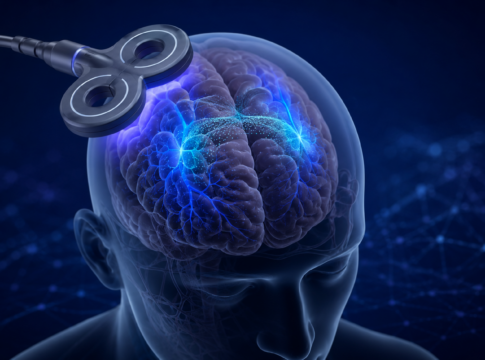
Quand le cerveau s’éteint à l’IRM : un signal plus complexe...
Quand une diminution du signal reste difficile à interpréter
L’imagerie par résonance magnétique fonctionnelle (IRMf) permet de repérer les régions du cerveau qui réagissent...
La connaissance comme récompense
Comparaison de différents types de récompenses
Les participants prennent part à une tâche comprenant trois types de récompenses, de valeur élevée ou faible :
-...
Réseaux cérébraux de la mémoire dans l’épilepsie
Cartographie multimodale des réseaux cérébraux
Combinaison de l'EEG, de l'IRM à champ ultra-élevé et de modèles animaux
Ce projet vise à identifier les marqueurs...