Despite recent improvements, complete motor recovery occurs in <15% of stroke patients. To improve the therapeutic outcomes, there is a strong need to tailor treatments to each individual patient. However, there is a lack of knowledge concerning the precise neuronal mechanisms underlying the degree and course of motor recovery and its individual differences, especially in the view of brain network properties despite the fact that it became more and more clear that stroke is a network disorder. The TiMeS project is a longitudinal exploratory study aiming at characterizing stroke phenotypes of a large, representative stroke cohort through an extensive, multi-modal and multi-domain evaluation. The ultimate goal of the study is to identify prognostic biomarkers allowing to predict the individual degree and course of motor recovery and its underlying neuronal mechanisms paving the way for novel interventions and treatment stratification for the individual patients. A total of up to 100 patients will be assessed at 4 timepoints over the first year after the stroke: during the first (T1) and third (T2) week, then three (T3) and twelve (T4) months after stroke onset. To assess underlying mechanisms of recovery with a focus on network analyses and brain connectivity, we will apply synergistic state-of-the-art systems neuroscience methods including functional, diffusion, and structural magnetic resonance imaging (MRI), and electrophysiological evaluation based on transcranial magnetic stimulation (TMS) coupled with electroencephalography (EEG) and electromyography (EMG). In addition, an extensive, multi-domain neuropsychological evaluation will be performed at each timepoint, covering all sensorimotor and cognitive domains. This project will significantly add to the understanding of underlying mechanisms of motor recovery with a strong focus on the interactions between the motor and other cognitive domains and multimodal network analyses. The population-based, multi-dimensional dataset will serve as a basis to develop biomarkers to predict outcome and promote personalized stratification toward individually tailored treatment concepts using neuro-technologies, thus paving the way toward personalized precision medicine approaches in stroke rehabilitation.
Publication scientifique
Toward individualized medicine in stroke—The TiMeS project: Protocol of longitudinal, multi-modal, multi-domain study in stroke
Autres publications de la plateforme
Characterising the Diffusion Functional Signature of Negative BOLD With Interleaved TMS...
De Riedmatten, Inès; Spencer, Arthur P. C.; Martuzzi, Roberto; Rochas, Vincent; Pérot, Jean‐Baptiste; Szczepankiewicz, Filip; Jelescu, Ileana O.
Human Brain Mapping
Aberrant cerebrovascular reactivity presents as an early biomarker of psychosis susceptibility...
Delavari, Farnaz; Moia, Stefano; Forrer, Silas; Sandini, Corrado; Kojovic, Nada; Pascucci, Alessandro; Lacour, Clémence; Eliez, Stephan; Van De Ville, Dimitri
Translational Psychiatry
Real-time reinforcement for human-machine interface control
Vassiliadis, Pierre; Pinheiro, Daniel Leal; Fleury, Lisa; Zenon, Alexandre; Esparza-Iaizzo, Martín; Ingster, Abigaïl; Micera, Silvestro; Shokur, Solaiman; Hummel, Friedhelm C.
Neuron
Developmental Alterations in the Diffusion Tensor Imaging Analysis Along the Perivascular...
Pascucci, Alessandro; Forrer, Silas; Sandini, Corrado; Mancini, Valentina; Alemán-Gómez, Yasser; Eliez, Stephan; Delavari, Farnaz
Biological Psychiatry Global Open Science
How Much Does Motion Matter? Evaluating the Motion Robustness of pTx...
Philippe, Jocelyn; Pato Montemayor, Natalia; Romanin, Ludovica; Sleight, Emilie; Klauser, Antoine; Di Noto, Tommaso; Bacha, Lina; Maréchal, Bénédicte; Herrler, Jürgen; Liebig, Patrick A.; Heidemann, Robin M.; Thiran, Jean‐Philippe; Hilbert, Tom; Piredda, Gian Franco; Yu, Thomas
Magnetic Resonance in Medicine
Linguistic pitch is hierarchically encoded in the right ventral stream
Oderbolz, Chantal; Orpella, Joan; Meyer, Martin
Communications Biology
Journal de publication
Frontiers in Neurology
Auteurs:
Fleury, Lisa; Koch, Philipp J.; Wessel, Maximilian J.; Bonvin, Christophe; San Millan, Diego; Constantin, Christophe; Vuadens, Philippe; Adolphsen, Jan; Cadic Melchior, Andéol; Brügger, Julia; Beanato, Elena; Ceroni, Martino; Menoud, Pauline; De Leon Rodriguez, Diego; Zufferey, Valérie; Meyer, Nathalie H.; Egger, Philip; Harquel, Sylvain; Popa, Traian; Raffin, Estelle; Girard, Gabriel; Thiran, Jean-Philippe; Vaney, Claude; Alvarez, Vincent; Turlan, Jean-Luc; Mühl, Andreas; Léger, Bertrand; Morishita, Takuya; Micera, Silvestro; Blanke, Olaf; Van De Ville, Dimitri; Hummel, Friedhelm C.
Date de publication:
Plateforme:
Études récentes de la plateforme
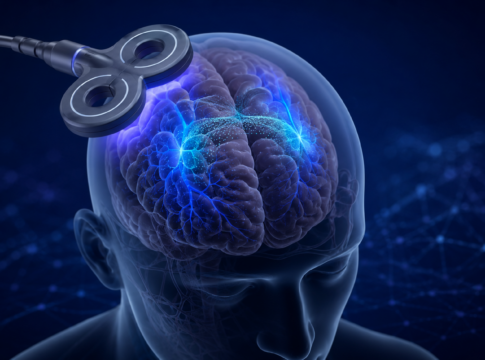
Quand le cerveau s’éteint à l’IRM : un signal plus complexe...
Quand une diminution du signal reste difficile à interpréter
L’imagerie par résonance magnétique fonctionnelle (IRMf) permet de repérer les régions du cerveau qui réagissent...
La connaissance comme récompense
Comparaison de différents types de récompenses
Les participants prennent part à une tâche comprenant trois types de récompenses, de valeur élevée ou faible :
-...
Réseaux cérébraux de la mémoire dans l’épilepsie
Cartographie multimodale des réseaux cérébraux
Combinaison de l'EEG, de l'IRM à champ ultra-élevé et de modèles animaux
Ce projet vise à identifier les marqueurs...