


Abstract Humans and animals are able to rapidly, and with reasonable accuracy, estimate the number of objects in a visual scene. Visual-evoked potential studies have described a sequence of functionally distinct stages associated with numerosity perception. Recently, a specialized cognitive-perceptual system for the numerosity estimation for human stimuli (NEH), distinct from that for non-social stimuli, was revealed using virtual reality, revealing a stable NEH overestimation bias (ie perceiving more people than were shown). This bias was further increased when a social hallucination characterized by the false perception of another invisible person (presence hallucination) was induced robotically and repeatedly prior to NEH trials. However, little is known about the brain mechanisms of NEH and robot-induced presence hallucination. Here we combined virtual reality and robotically-induced presence hallucination with visual-evoked potentials to investigate the neural mechanisms and processing steps of NEH. We report that NEH induces numerosity-related components as observed for non-human numerosity stimuli and, critically that experimentally-induced presence hallucination selectively modulated the P2p component, whose amplitude correlated with NEH overestimation magnitude. This effect was localized in left extrastriate cortex, showing that robot-induced presence hallucination are integrated with NEH processing during the P2p time period and relying on social numerosity mechanisms in extrastriate cortex.
Publication scientifique
Extrastriate activity reflects sensorimotor-induced bias in estimating number of visual humans
Autres publications de la plateforme
Characterising the Diffusion Functional Signature of Negative BOLD With Interleaved TMS...
De Riedmatten, Inès; Spencer, Arthur P. C.; Martuzzi, Roberto; Rochas, Vincent; Pérot, Jean‐Baptiste; Szczepankiewicz, Filip; Jelescu, Ileana O.
Human Brain Mapping
Aberrant cerebrovascular reactivity presents as an early biomarker of psychosis susceptibility...
Delavari, Farnaz; Moia, Stefano; Forrer, Silas; Sandini, Corrado; Kojovic, Nada; Pascucci, Alessandro; Lacour, Clémence; Eliez, Stephan; Van De Ville, Dimitri
Translational Psychiatry
Real-time reinforcement for human-machine interface control
Vassiliadis, Pierre; Pinheiro, Daniel Leal; Fleury, Lisa; Zenon, Alexandre; Esparza-Iaizzo, Martín; Ingster, Abigaïl; Micera, Silvestro; Shokur, Solaiman; Hummel, Friedhelm C.
Neuron
Developmental Alterations in the Diffusion Tensor Imaging Analysis Along the Perivascular...
Pascucci, Alessandro; Forrer, Silas; Sandini, Corrado; Mancini, Valentina; Alemán-Gómez, Yasser; Eliez, Stephan; Delavari, Farnaz
Biological Psychiatry Global Open Science
How Much Does Motion Matter? Evaluating the Motion Robustness of pTx...
Philippe, Jocelyn; Pato Montemayor, Natalia; Romanin, Ludovica; Sleight, Emilie; Klauser, Antoine; Di Noto, Tommaso; Bacha, Lina; Maréchal, Bénédicte; Herrler, Jürgen; Liebig, Patrick A.; Heidemann, Robin M.; Thiran, Jean‐Philippe; Hilbert, Tom; Piredda, Gian Franco; Yu, Thomas
Magnetic Resonance in Medicine
Linguistic pitch is hierarchically encoded in the right ventral stream
Oderbolz, Chantal; Orpella, Joan; Meyer, Martin
Communications Biology
Journal de publication
Cerebral Cortex
Auteurs:
Albert, Louis; Herbelin, Bruno; Bernasconi, Fosco; Blanke, Olaf
Date de publication:
Plateforme:
Études récentes de la plateforme
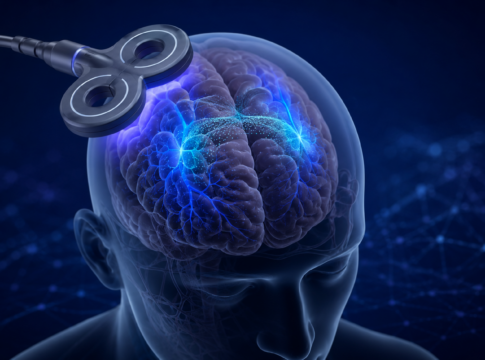
Quand le cerveau s’éteint à l’IRM : un signal plus complexe...
Quand une diminution du signal reste difficile à interpréter
L’imagerie par résonance magnétique fonctionnelle (IRMf) permet de repérer les régions du cerveau qui réagissent...
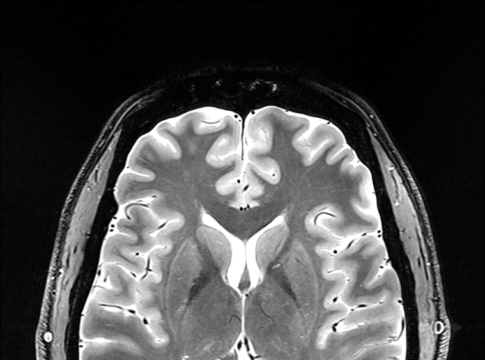
La connaissance comme récompense
Comparaison de différents types de récompenses
Les participants prennent part à une tâche comprenant trois types de récompenses, de valeur élevée ou faible :
-...
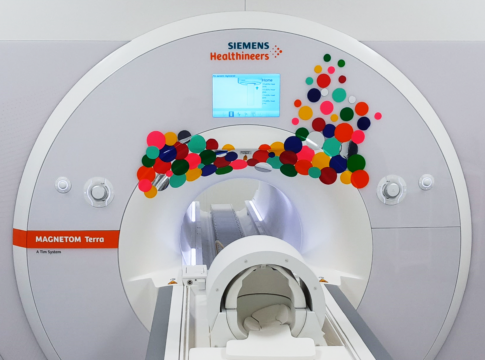
Réseaux cérébraux de la mémoire dans l’épilepsie
Cartographie multimodale des réseaux cérébraux
Combinaison de l'EEG, de l'IRM à champ ultra-élevé et de modèles animaux
Ce projet vise à identifier les marqueurs...