

Abstract Flow has been defined as a state of full immersion that may emerge when the skills of a person match the challenge of an activity. It is a special case of being on task, as during flow, keeping focused on the task feels effortless. Most experimental investigations of the neural or physiological correlates of flow contrast conditions with different levels of challenge. Yet comparing different levels of challenge that are too distant may trigger states where the participant is off task, such as boredom or frustration. Thus, it remains unclear whether previously observed differences ascribed to flow may rather reflect differences in how much participants were on task—trying their best—across the contrasted conditions. To remedy this, we introduce a method to manipulate flow by contrasting two video game play conditions at personalized levels of difficulty calibrated such that participants similarly tried their best in both conditions. Across three experiments (> 90 participants), higher flow was robustly reported in our high-flow than in our low-flow condition (mean effect size d = 1.31). Cardiac, respiratory, and skin conductance measures confirmed the known difference between a period of rest and the two on-task conditions of high and low flow, but failed to distinguish between these latter two. In light of the conflicting findings regarding the physiological correlates of flow, we discuss the importance of ensuring a low-flow baseline condition that maintains participants on task, and propose that the present method provides a methodological advance toward that goal.
Publication scientifique
A video-game-based method to induce states of high and low flow
Autres publications de la plateforme
Characterising the Diffusion Functional Signature of Negative BOLD With Interleaved TMS...
De Riedmatten, Inès; Spencer, Arthur P. C.; Martuzzi, Roberto; Rochas, Vincent; Pérot, Jean‐Baptiste; Szczepankiewicz, Filip; Jelescu, Ileana O.
Human Brain Mapping
Aberrant cerebrovascular reactivity presents as an early biomarker of psychosis susceptibility...
Delavari, Farnaz; Moia, Stefano; Forrer, Silas; Sandini, Corrado; Kojovic, Nada; Pascucci, Alessandro; Lacour, Clémence; Eliez, Stephan; Van De Ville, Dimitri
Translational Psychiatry
Real-time reinforcement for human-machine interface control
Vassiliadis, Pierre; Pinheiro, Daniel Leal; Fleury, Lisa; Zenon, Alexandre; Esparza-Iaizzo, Martín; Ingster, Abigaïl; Micera, Silvestro; Shokur, Solaiman; Hummel, Friedhelm C.
Neuron
Developmental Alterations in the Diffusion Tensor Imaging Analysis Along the Perivascular...
Pascucci, Alessandro; Forrer, Silas; Sandini, Corrado; Mancini, Valentina; Alemán-Gómez, Yasser; Eliez, Stephan; Delavari, Farnaz
Biological Psychiatry Global Open Science
How Much Does Motion Matter? Evaluating the Motion Robustness of pTx...
Philippe, Jocelyn; Pato Montemayor, Natalia; Romanin, Ludovica; Sleight, Emilie; Klauser, Antoine; Di Noto, Tommaso; Bacha, Lina; Maréchal, Bénédicte; Herrler, Jürgen; Liebig, Patrick A.; Heidemann, Robin M.; Thiran, Jean‐Philippe; Hilbert, Tom; Piredda, Gian Franco; Yu, Thomas
Magnetic Resonance in Medicine
Linguistic pitch is hierarchically encoded in the right ventral stream
Oderbolz, Chantal; Orpella, Joan; Meyer, Martin
Communications Biology
Journal de publication
Behavior Research Methods
Auteurs:
Joessel, Freya; Pichon, Swann; Bavelier, Daphne
Date de publication:
Plateforme:
Études récentes de la plateforme
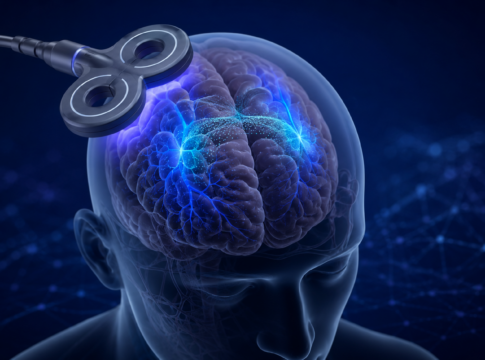
Quand le cerveau s’éteint à l’IRM : un signal plus complexe...
Quand une diminution du signal reste difficile à interpréter
L’imagerie par résonance magnétique fonctionnelle (IRMf) permet de repérer les régions du cerveau qui réagissent...
La connaissance comme récompense
Comparaison de différents types de récompenses
Les participants prennent part à une tâche comprenant trois types de récompenses, de valeur élevée ou faible :
-...
Réseaux cérébraux de la mémoire dans l’épilepsie
Cartographie multimodale des réseaux cérébraux
Combinaison de l'EEG, de l'IRM à champ ultra-élevé et de modèles animaux
Ce projet vise à identifier les marqueurs...