

Abstract Autonoetic consciousness (ANC) enables individuals to relive past events by recalling sensory and emotional details tied to a specific place and time related to a past event. Next to ample evidence linking ANC to memory-related mechanisms, recent behavioral evidence suggests that ANC is modulated by sensorimotor and multisensory bodily mechanisms that are fundamental for bodily self-consciousness (BSC). However, the neural mechanisms of how BSC modulates ANC remain unclear. Based on previous work showing that activity in dorsal premotor cortex (dPMC) and hippocampus indexes BSC effects and its related sense of agency (SoA) in episodic memory, we here explored whether functional connectivity between dPMC and hippocampus at encoding is related to later autonoetic reliving. Using virtual reality (VR), during the encoding of virtual scenes, we manipulated BSC by varying the level of visuomotor (feedback of participants’ right-hand movements) and perspectival congruency (first-person versus third-person perspective), while recording brain activity, and collected ANC 1 week after encoding by established questionnaire procedures. Our results show that changes in functional connectivity strength between left hippocampus and left dPMC (contralateral to hand movements) were associated with different levels of visuomotor and perspectival congruency. Moreover, this connectivity modulated the relationship of SoA during encoding with later subjective ANC during reliving. Thus, higher connectivity was associated with a stronger SoA–ANC association, while lower connectivity led to a weaker association. Critically, this modulatory effect was absent for dPMC–hippocampus connectivity in the right hemisphere (i.e., ipsilateral to hand movements). These findings support the role of dPMC, a key SoA region, in ANC, linking subjective bodily experience during encoding to the subsequent subjective re-experiencing of past events.
Publication scientifique
Subjective reliving of past events is modulated by premotor–hippocampal coupling and bodily self-consciousness during event encoding
Autres publications de la plateforme
Characterising the Diffusion Functional Signature of Negative BOLD With Interleaved TMS...
De Riedmatten, Inès; Spencer, Arthur P. C.; Martuzzi, Roberto; Rochas, Vincent; Pérot, Jean‐Baptiste; Szczepankiewicz, Filip; Jelescu, Ileana O.
Human Brain Mapping
Aberrant cerebrovascular reactivity presents as an early biomarker of psychosis susceptibility...
Delavari, Farnaz; Moia, Stefano; Forrer, Silas; Sandini, Corrado; Kojovic, Nada; Pascucci, Alessandro; Lacour, Clémence; Eliez, Stephan; Van De Ville, Dimitri
Translational Psychiatry
Real-time reinforcement for human-machine interface control
Vassiliadis, Pierre; Pinheiro, Daniel Leal; Fleury, Lisa; Zenon, Alexandre; Esparza-Iaizzo, Martín; Ingster, Abigaïl; Micera, Silvestro; Shokur, Solaiman; Hummel, Friedhelm C.
Neuron
Developmental Alterations in the Diffusion Tensor Imaging Analysis Along the Perivascular...
Pascucci, Alessandro; Forrer, Silas; Sandini, Corrado; Mancini, Valentina; Alemán-Gómez, Yasser; Eliez, Stephan; Delavari, Farnaz
Biological Psychiatry Global Open Science
How Much Does Motion Matter? Evaluating the Motion Robustness of pTx...
Philippe, Jocelyn; Pato Montemayor, Natalia; Romanin, Ludovica; Sleight, Emilie; Klauser, Antoine; Di Noto, Tommaso; Bacha, Lina; Maréchal, Bénédicte; Herrler, Jürgen; Liebig, Patrick A.; Heidemann, Robin M.; Thiran, Jean‐Philippe; Hilbert, Tom; Piredda, Gian Franco; Yu, Thomas
Magnetic Resonance in Medicine
Linguistic pitch is hierarchically encoded in the right ventral stream
Oderbolz, Chantal; Orpella, Joan; Meyer, Martin
Communications Biology
Journal de publication
Imaging Neuroscience
Auteurs:
Meyer, Nathalie Heidi; Burget, Lucas; Gauthier, Baptiste; Potheegadoo, Jevita; Boscheron, Juliette; Blanke, Olaf
Date de publication:
Plateforme:
Études récentes de la plateforme
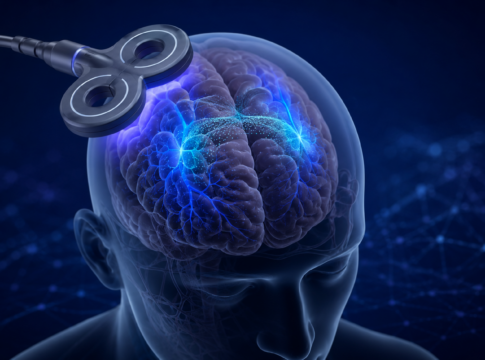
Quand le cerveau s’éteint à l’IRM : un signal plus complexe...
Quand une diminution du signal reste difficile à interpréter
L’imagerie par résonance magnétique fonctionnelle (IRMf) permet de repérer les régions du cerveau qui réagissent...
La connaissance comme récompense
Comparaison de différents types de récompenses
Les participants prennent part à une tâche comprenant trois types de récompenses, de valeur élevée ou faible :
-...
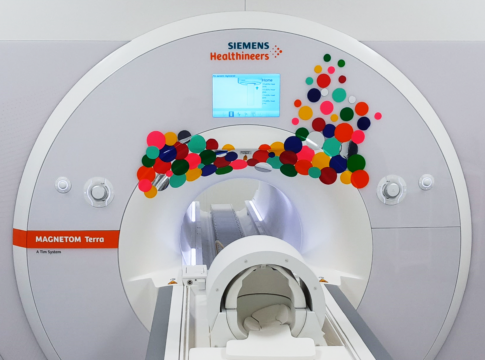
Réseaux cérébraux de la mémoire dans l’épilepsie
Cartographie multimodale des réseaux cérébraux
Combinaison de l'EEG, de l'IRM à champ ultra-élevé et de modèles animaux
Ce projet vise à identifier les marqueurs...