


Abstract The temporal variability of the thalamus in functional networks may provide valuable insights into the pathophysiology of schizophrenia. To address the complexity of the role of the thalamic nuclei in psychosis, we introduced micro‐co‐activation patterns (μCAPs) and employed this method on the human genetic model of schizophrenia 22q11.2 deletion syndrome (22q11.2DS). Participants underwent resting‐state functional MRI and a data‐driven iterative process resulting in the identification of six whole‐brain μCAPs with specific activity patterns within the thalamus. Unlike conventional methods, μCAPs extract dynamic spatial patterns that reveal partially overlapping and non‐mutually exclusive functional subparts. Thus, the μCAPs method detects finer foci of activity within the initial seed region, retaining valuable and clinically relevant temporal and spatial information. We found that a μCAP showing co‐activation of the mediodorsal thalamus with brain‐wide cortical regions was expressed significantly less frequently in patients with 22q11.2DS, and its occurrence negatively correlated with the severity of positive psychotic symptoms. Additionally, activity within the auditory–visual cortex and their respective geniculate nuclei was expressed in two different μCAPs. One of these auditory–visual μCAPs co‐activated with salience areas, while the other co‐activated with the default mode network (DMN). A significant shift of occurrence from the salience+visuo‐auditory‐thalamus to the DMN + visuo‐auditory‐thalamus μCAP was observed in patients with 22q11.2DS. Thus, our findings support existing research on the gatekeeping role of the thalamus for sensory information in the pathophysiology of psychosis and revisit the evidence of geniculate nuclei hyperconnectivity with the audio‐visual cortex in 22q11.2DS in the context of dynamic functional connectivity, seen here as the specific hyper‐occurrence of these circuits with the task‐negative brain networks.
Publication scientifique
Thalamic contributions to psychosis susceptibility: Evidence from co‐activation patterns accounting for intra‐seed spatial variability ( μCAPs )
Autres publications de la plateforme
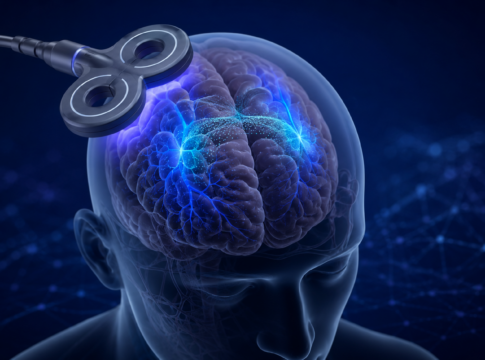
Characterising the Diffusion Functional Signature of Negative BOLD With Interleaved TMS...
De Riedmatten, Inès; Spencer, Arthur P. C.; Martuzzi, Roberto; Rochas, Vincent; Pérot, Jean‐Baptiste; Szczepankiewicz, Filip; Jelescu, Ileana O.
Human Brain Mapping
Aberrant cerebrovascular reactivity presents as an early biomarker of psychosis susceptibility...
Delavari, Farnaz; Moia, Stefano; Forrer, Silas; Sandini, Corrado; Kojovic, Nada; Pascucci, Alessandro; Lacour, Clémence; Eliez, Stephan; Van De Ville, Dimitri
Translational Psychiatry
Real-time reinforcement for human-machine interface control
Vassiliadis, Pierre; Pinheiro, Daniel Leal; Fleury, Lisa; Zenon, Alexandre; Esparza-Iaizzo, Martín; Ingster, Abigaïl; Micera, Silvestro; Shokur, Solaiman; Hummel, Friedhelm C.
Neuron
Developmental Alterations in the Diffusion Tensor Imaging Analysis Along the Perivascular...
Pascucci, Alessandro; Forrer, Silas; Sandini, Corrado; Mancini, Valentina; Alemán-Gómez, Yasser; Eliez, Stephan; Delavari, Farnaz
Biological Psychiatry Global Open Science
How Much Does Motion Matter? Evaluating the Motion Robustness of pTx...
Philippe, Jocelyn; Pato Montemayor, Natalia; Romanin, Ludovica; Sleight, Emilie; Klauser, Antoine; Di Noto, Tommaso; Bacha, Lina; Maréchal, Bénédicte; Herrler, Jürgen; Liebig, Patrick A.; Heidemann, Robin M.; Thiran, Jean‐Philippe; Hilbert, Tom; Piredda, Gian Franco; Yu, Thomas
Magnetic Resonance in Medicine
Linguistic pitch is hierarchically encoded in the right ventral stream
Oderbolz, Chantal; Orpella, Joan; Meyer, Martin
Communications Biology
Journal de publication
Human Brain Mapping
Auteurs:
Delavari, Farnaz; Sandini, Corrado; Kojovic, Nada; Saccaro, Luigi F.; Eliez, Stephan; Van De Ville, Dimitri; Bolton, Thomas A. W.
Date de publication:
Plateforme:
Études récentes de la plateforme
Quand le cerveau s’éteint à l’IRM : un signal plus complexe...
Quand une diminution du signal reste difficile à interpréter
L’imagerie par résonance magnétique fonctionnelle (IRMf) permet de repérer les régions du cerveau qui réagissent...
La connaissance comme récompense
Comparaison de différents types de récompenses
Les participants prennent part à une tâche comprenant trois types de récompenses, de valeur élevée ou faible :
-...
Réseaux cérébraux de la mémoire dans l’épilepsie
Cartographie multimodale des réseaux cérébraux
Combinaison de l'EEG, de l'IRM à champ ultra-élevé et de modèles animaux
Ce projet vise à identifier les marqueurs...