


Electroencephalography (EEG) based brain-computer interfaces (BCIs) offer a promising way for individuals with motor impairments to control prosthetic or rehabilitation devices. Accurately decoding movement intention (MI) is crucial for translating subjects’ motor execution plans into action. Common challenges in EEG-based BCIs include performance discrepancies, often requiring frequent recalibration of decoding algorithms. The objective of this study was enhancing BCI decoding performance of upper-limb MI identification by exploiting both machine and subjects’ learning and maintaining stable decoding algorithms. Significant performance improvements were observed across most subjects from the first to the last session of the experiment. Some subjects also demonstrated stable performance without requiring any model recalibration between sessions. All subjects achieved high efficacy in online decoding of movement intention, as reflected in improvement of the F1 score from 0.58pm 0.26 in the first session, to 0.84pm 0.13 in the final session. We emphasize the critical importance of allowing users sufficient time to improve their performance in BCIs for upper-limb MI decoding. Unlike existing studies, we specifically evaluate the effect of stable decoding strategies in online and longitudinal BCI sessions, which are key to achieving more reliable and effective BCIs.
Publication scientifique
The Effect of User Learning for Online EEG Decoding of Upper-Limb Movement Intention
Autres publications de la plateforme
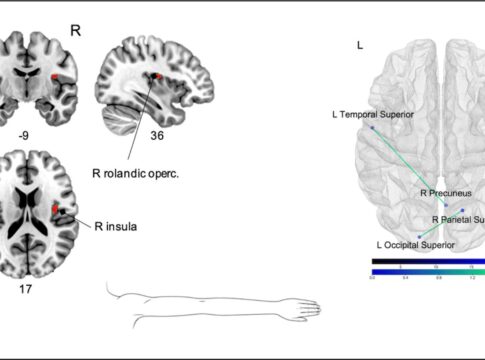
Motor-evoked modules obtained from transcranial magnetic stimulation
Morishita, Takuya; Coscia, Martina; Bacigalupo, Mirea; Lassi, Michael; Proulx, Camille E.; Fleury, Lisa; Hummel, Friedhelm C.
Journal of Neurophysiology
Characterising the Diffusion Functional Signature of Negative BOLD With Interleaved TMS...
De Riedmatten, Inès; Spencer, Arthur P. C.; Martuzzi, Roberto; Rochas, Vincent; Pérot, Jean‐Baptiste; Szczepankiewicz, Filip; Jelescu, Ileana O.
Human Brain Mapping
Real-time reinforcement for human-machine interface control
Vassiliadis, Pierre; Pinheiro, Daniel Leal; Fleury, Lisa; Zenon, Alexandre; Esparza-Iaizzo, Martín; Ingster, Abigaïl; Micera, Silvestro; Shokur, Solaiman; Hummel, Friedhelm C.
Neuron
EEG microstates: from methodological foundations to clinical translation
Michel, Christoph M.; Bréchet, Lucie
Trends in Neurosciences
Linguistic pitch is hierarchically encoded in the right ventral stream
Oderbolz, Chantal; Orpella, Joan; Meyer, Martin
Communications Biology
Causal disconnectomics of motion perception networks: insights from transcranial magnetic stimulation‐induced...
Raffin, Estelle; Salamanca‐Giron, Roberto F.; Huxlin, Krystel R.; Reynaud, Olivier; Mattera, Loan; Martuzzi, Roberto; Hummel, Friedhelm C.
The Journal of Physiology
Journal de publication
IEEE Transactions on Medical Robotics and Bionics
Auteurs:
Ceradini, Matteo; Tortora, Stefano; Micera, Silvestro; Tonin, Luca
Date de publication:
Plateforme:
Études récentes de la plateforme
Perte de conscience de soi
Eveiller la prise de conscience
Les troubles de la conscience de soi ne sont pas tous immédiatement perceptibles : certains restent masqués lors d'un...
Quand le cerveau s’éteint à l’IRM : un signal plus complexe...
Quand une diminution du signal reste difficile à interpréter
L’imagerie par résonance magnétique fonctionnelle (IRMf) permet de repérer les régions du cerveau qui réagissent...
La connaissance comme récompense
Comparaison de différents types de récompenses
Les participants prennent part à une tâche comprenant trois types de récompenses, de valeur élevée ou faible :
-...