

Previous studies have shown that self-generated stimuli in auditory, visual, and somatosensory domains are attenuated, producing decreased behavioral and neural responses compared with the same stimuli that are externally generated. Yet, whether such attenuation also occurs for higher-level cognitive functions beyond sensorimotor processing remains unknown. In this study, we assessed whether cognitive functions such as numerosity estimations are subject to attenuation in 56 healthy participants (32 women). We designed a task allowing the controlled comparison of numerosity estimations for self-generated (active condition) and externally generated (passive condition) words. Our behavioral results showed a larger underestimation of self-generated compared with externally generated words, suggesting that numerosity estimations for self-generated words are attenuated. Moreover, the linear relationship between the reported and actual number of words was stronger for self-generated words, although the ability to track errors about numerosity estimations was similar across conditions. Neuroimaging results revealed that numerosity underestimation involved increased functional connectivity between the right intraparietal sulcus and an extended network (bilateral supplementary motor area, left inferior parietal lobule, and left superior temporal gyrus) when estimating the number of self-generated versus externally generated words. We interpret our results in light of two models of attenuation and discuss their perceptual versus cognitive origins. SIGNIFICANCE STATEMENT We perceive sensory events as less intense when they are self-generated compared with when they are externally generated. This phenomenon, called attenuation, enables us to distinguish sensory events from self and external origins. Here, we designed a novel fMRI paradigm to assess whether cognitive processes such as numerosity estimations are also subject to attenuation. When asking participants to estimate the number of words they had generated or passively heard, we found bigger underestimation in the former case, providing behavioral evidence of attenuation. Attenuation was associated with increased functional connectivity of the intraparietal sulcus, a region involved in numerosity processing. Together, our results indicate that the attenuation of self-generated stimuli is not limited to sensory consequences but is also impact cognitive processes such as numerosity estimations.
Publication scientifique
Increased Functional Connectivity of the Intraparietal Sulcus Underlies the Attenuation of Numerosity Estimations for Self-Generated Words
Autres publications de la plateforme
Characterising the Diffusion Functional Signature of Negative BOLD With Interleaved TMS...
De Riedmatten, Inès; Spencer, Arthur P. C.; Martuzzi, Roberto; Rochas, Vincent; Pérot, Jean‐Baptiste; Szczepankiewicz, Filip; Jelescu, Ileana O.
Human Brain Mapping
Aberrant cerebrovascular reactivity presents as an early biomarker of psychosis susceptibility...
Delavari, Farnaz; Moia, Stefano; Forrer, Silas; Sandini, Corrado; Kojovic, Nada; Pascucci, Alessandro; Lacour, Clémence; Eliez, Stephan; Van De Ville, Dimitri
Translational Psychiatry
Real-time reinforcement for human-machine interface control
Vassiliadis, Pierre; Pinheiro, Daniel Leal; Fleury, Lisa; Zenon, Alexandre; Esparza-Iaizzo, Martín; Ingster, Abigaïl; Micera, Silvestro; Shokur, Solaiman; Hummel, Friedhelm C.
Neuron
Developmental Alterations in the Diffusion Tensor Imaging Analysis Along the Perivascular...
Pascucci, Alessandro; Forrer, Silas; Sandini, Corrado; Mancini, Valentina; Alemán-Gómez, Yasser; Eliez, Stephan; Delavari, Farnaz
Biological Psychiatry Global Open Science
How Much Does Motion Matter? Evaluating the Motion Robustness of pTx...
Philippe, Jocelyn; Pato Montemayor, Natalia; Romanin, Ludovica; Sleight, Emilie; Klauser, Antoine; Di Noto, Tommaso; Bacha, Lina; Maréchal, Bénédicte; Herrler, Jürgen; Liebig, Patrick A.; Heidemann, Robin M.; Thiran, Jean‐Philippe; Hilbert, Tom; Piredda, Gian Franco; Yu, Thomas
Magnetic Resonance in Medicine
Enhancing SNR in MRI at 7T using wearable coils, dielectric resonators,...
Wenz, Daniel; Vliem, Jules; Shegurova, Elizaveta; Widmaier, Mark; Xin, Lijing; Karampinos, Dimitrios C.; Zivkovic, Irena
Magnetic Resonance Materials in Physics, Biology and Medicine
Journal de publication
The Journal of Neuroscience
Auteurs:
Stripeikyte, Giedre; Pereira, Michael; Rognini, Giulio; Potheegadoo, Jevita; Blanke, Olaf; Faivre, Nathan
Date de publication:
Plateforme:
Études récentes de la plateforme
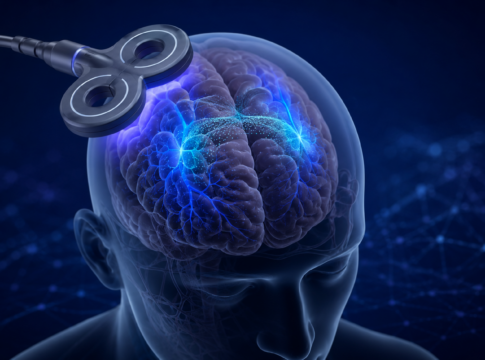
Quand le cerveau s’éteint à l’IRM : un signal plus complexe...
Quand une diminution du signal reste difficile à interpréter
L’imagerie par résonance magnétique fonctionnelle (IRMf) permet de repérer les régions du cerveau qui réagissent...
La connaissance comme récompense
Comparaison de différents types de récompenses
Les participants prennent part à une tâche comprenant trois types de récompenses, de valeur élevée ou faible :
-...
Réseaux cérébraux de la mémoire dans l’épilepsie
Cartographie multimodale des réseaux cérébraux
Combinaison de l'EEG, de l'IRM à champ ultra-élevé et de modèles animaux
Ce projet vise à identifier les marqueurs...