

Abstract When performing willed actions, we have the unified and coherent experience of owning and controlling our body. Body ownership is believed to emerge from the integration of coherent multisensory signals, while agency is believed to emerge from the coherence between predicted and perceived outcomes of actions. As a consequence, body ownership and agency can both be modulated by multisensory conflicts. The contribution of active movement generation to ownership and agency has not been parametrically explored. Here, we investigated the contribution of interaction force between the agent and the environment to the sense of hand ownership (SO) and the sense of hand agency (SA). By combining robotics and virtual reality, we manipulated the sensorimotor and visual information during immersive scenarios to induce and quantify altered states of SO and SA. First, we demonstrated that SO and SA could be successfully manipulated by our experimental paradigms. Second, we showed that interaction force strongly contributes to SA, but to a lesser extent to SO. Finally, we showed that SO and SA interact beyond their common multisensory basis. Our results, based on two independent studies, provide a direct link between sensorimotor interactions and subjective body experience and demonstrate a new dissociation between SO and SA.
Publication scientifique
Contribution of interaction force to the sense of hand ownership and the sense of hand agency
Autres publications de la plateforme
Characterising the Diffusion Functional Signature of Negative BOLD With Interleaved TMS...
De Riedmatten, Inès; Spencer, Arthur P. C.; Martuzzi, Roberto; Rochas, Vincent; Pérot, Jean‐Baptiste; Szczepankiewicz, Filip; Jelescu, Ileana O.
Human Brain Mapping
Aberrant cerebrovascular reactivity presents as an early biomarker of psychosis susceptibility...
Delavari, Farnaz; Moia, Stefano; Forrer, Silas; Sandini, Corrado; Kojovic, Nada; Pascucci, Alessandro; Lacour, Clémence; Eliez, Stephan; Van De Ville, Dimitri
Translational Psychiatry
Real-time reinforcement for human-machine interface control
Vassiliadis, Pierre; Pinheiro, Daniel Leal; Fleury, Lisa; Zenon, Alexandre; Esparza-Iaizzo, Martín; Ingster, Abigaïl; Micera, Silvestro; Shokur, Solaiman; Hummel, Friedhelm C.
Neuron
Developmental Alterations in the Diffusion Tensor Imaging Analysis Along the Perivascular...
Pascucci, Alessandro; Forrer, Silas; Sandini, Corrado; Mancini, Valentina; Alemán-Gómez, Yasser; Eliez, Stephan; Delavari, Farnaz
Biological Psychiatry Global Open Science
How Much Does Motion Matter? Evaluating the Motion Robustness of pTx...
Philippe, Jocelyn; Pato Montemayor, Natalia; Romanin, Ludovica; Sleight, Emilie; Klauser, Antoine; Di Noto, Tommaso; Bacha, Lina; Maréchal, Bénédicte; Herrler, Jürgen; Liebig, Patrick A.; Heidemann, Robin M.; Thiran, Jean‐Philippe; Hilbert, Tom; Piredda, Gian Franco; Yu, Thomas
Magnetic Resonance in Medicine
Enhancing SNR in MRI at 7T using wearable coils, dielectric resonators,...
Wenz, Daniel; Vliem, Jules; Shegurova, Elizaveta; Widmaier, Mark; Xin, Lijing; Karampinos, Dimitrios C.; Zivkovic, Irena
Magnetic Resonance Materials in Physics, Biology and Medicine
Journal de publication
Scientific Reports
Auteurs:
Akselrod, Michel; Vigaru, Bogdan; Duenas, Julio; Martuzzi, Roberto; Sulzer, James; Serino, Andrea; Blanke, Olaf; Gassert, Roger
Date de publication:
Plateforme:
Études récentes de la plateforme
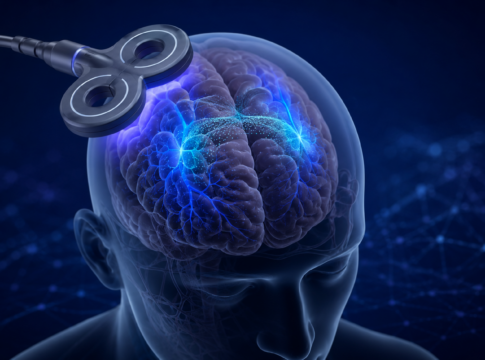
Quand le cerveau s’éteint à l’IRM : un signal plus complexe...
Quand une diminution du signal reste difficile à interpréter
L’imagerie par résonance magnétique fonctionnelle (IRMf) permet de repérer les régions du cerveau qui réagissent...
La connaissance comme récompense
Comparaison de différents types de récompenses
Les participants prennent part à une tâche comprenant trois types de récompenses, de valeur élevée ou faible :
-...
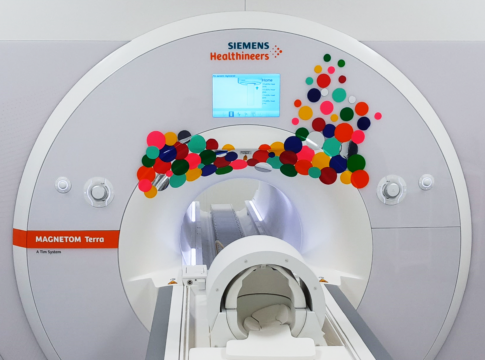
Réseaux cérébraux de la mémoire dans l’épilepsie
Cartographie multimodale des réseaux cérébraux
Combinaison de l'EEG, de l'IRM à champ ultra-élevé et de modèles animaux
Ce projet vise à identifier les marqueurs...