
BACKGROUND: Cortical excitation/inhibition dynamics have been suggested as a key mechanism occurring after stroke. Their supportive or maladaptive role in the course of recovery is still not completely understood. Here, we used transcranial magnetic stimulation (TMS)-electroencephalography coupling to study cortical reactivity and intracortical GABAergic inhibition, as well as their relationship to residual motor function and recovery longitudinally in patients with stroke. METHODS: Electroencephalography responses evoked by TMS applied to the ipsilesional motor cortex were acquired in patients with stroke with upper limb motor deficit in the acute (1 week), early (3 weeks), and late subacute (3 months) stages. Readouts of cortical reactivity, intracortical inhibition, and complexity of the evoked dynamics were drawn from TMS-evoked potentials induced by single-pulse and paired-pulse TMS (short-interval intracortical inhibition). Residual motor function was quantified through a detailed motor evaluation. RESULTS: From 76 patients enrolled, 66 were included (68.2±13.2 years old, 18 females), with a Fugl-Meyer score of the upper extremity of 46.8±19. The comparison with TMS-evoked potentials of healthy older revealed that most affected patients exhibited larger and simpler brain reactivity patterns ( P cluster <0.05). Bayesian ANCOVA statistical evidence for a link between abnormally high motor cortical excitability and impairment level. A decrease in excitability in the following months was significantly correlated with better motor recovery in the whole cohort and the subgroup of recovering patients. Investigation of the intracortical GABAergic inhibitory system revealed the presence of beneficial disinhibition in the acute stage, followed by a normalization of inhibitory activity. This was supported by significant correlations between motor scores and the contrast of local mean field power and readouts of signal dynamics. CONCLUSIONS: The present results revealed an abnormal motor cortical reactivity in patients with stroke, which was driven by perturbations and longitudinal changes within the intracortical inhibition system. They support the view that disinhibition in the ipsilesional motor cortex during the first-week poststroke is beneficial and promotes neuronal plasticity and recovery.
Publication scientifique
Stroke Recovery–Related Changes in Cortical Reactivity Based on Modulation of Intracortical Inhibition
Autres publications de la plateforme
Characterising the Diffusion Functional Signature of Negative BOLD With Interleaved TMS...
De Riedmatten, Inès; Spencer, Arthur P. C.; Martuzzi, Roberto; Rochas, Vincent; Pérot, Jean‐Baptiste; Szczepankiewicz, Filip; Jelescu, Ileana O.
Human Brain Mapping
Aberrant cerebrovascular reactivity presents as an early biomarker of psychosis susceptibility...
Delavari, Farnaz; Moia, Stefano; Forrer, Silas; Sandini, Corrado; Kojovic, Nada; Pascucci, Alessandro; Lacour, Clémence; Eliez, Stephan; Van De Ville, Dimitri
Translational Psychiatry
Real-time reinforcement for human-machine interface control
Vassiliadis, Pierre; Pinheiro, Daniel Leal; Fleury, Lisa; Zenon, Alexandre; Esparza-Iaizzo, Martín; Ingster, Abigaïl; Micera, Silvestro; Shokur, Solaiman; Hummel, Friedhelm C.
Neuron
Developmental Alterations in the Diffusion Tensor Imaging Analysis Along the Perivascular...
Pascucci, Alessandro; Forrer, Silas; Sandini, Corrado; Mancini, Valentina; Alemán-Gómez, Yasser; Eliez, Stephan; Delavari, Farnaz
Biological Psychiatry Global Open Science
How Much Does Motion Matter? Evaluating the Motion Robustness of pTx...
Philippe, Jocelyn; Pato Montemayor, Natalia; Romanin, Ludovica; Sleight, Emilie; Klauser, Antoine; Di Noto, Tommaso; Bacha, Lina; Maréchal, Bénédicte; Herrler, Jürgen; Liebig, Patrick A.; Heidemann, Robin M.; Thiran, Jean‐Philippe; Hilbert, Tom; Piredda, Gian Franco; Yu, Thomas
Magnetic Resonance in Medicine
Enhancing SNR in MRI at 7T using wearable coils, dielectric resonators,...
Wenz, Daniel; Vliem, Jules; Shegurova, Elizaveta; Widmaier, Mark; Xin, Lijing; Karampinos, Dimitrios C.; Zivkovic, Irena
Magnetic Resonance Materials in Physics, Biology and Medicine
Journal de publication
Stroke
Auteurs:
Harquel, Sylvain; Cadic-Melchior, Andéol; Morishita, Takuya; Fleury, Lisa; Witon, Adrien; Ceroni, Martino; Brügger, Julia; Meyer, Nathalie H.; Evangelista, Giorgia G.; Egger, Philip; Beanato, Elena; Menoud, Pauline; Van De Ville, Dimitri; Micera, Silvestro; Blanke, Olaf; Léger, Bertrand; Adolphsen, Jan; Jagella, Caroline; Constantin, Christophe; Alvarez, Vincent; Vuadens, Philippes; Turlan, Jean-Luc; Mühl, Andreas; Bonvin, Christophe; Koch, Philipp J.; Wessel, Maximilian J.; Hummel, Friedhelm C.
Date de publication:
Plateforme:
Études récentes de la plateforme
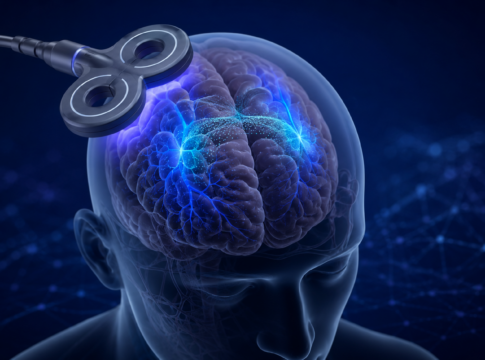
Quand le cerveau s’éteint à l’IRM : un signal plus complexe...
Quand une diminution du signal reste difficile à interpréter
L’imagerie par résonance magnétique fonctionnelle (IRMf) permet de repérer les régions du cerveau qui réagissent...
La connaissance comme récompense
Comparaison de différents types de récompenses
Les participants prennent part à une tâche comprenant trois types de récompenses, de valeur élevée ou faible :
-...
Réseaux cérébraux de la mémoire dans l’épilepsie
Cartographie multimodale des réseaux cérébraux
Combinaison de l'EEG, de l'IRM à champ ultra-élevé et de modèles animaux
Ce projet vise à identifier les marqueurs...