

Abstract With the increase in life expectancy and the rapid evolution of daily life technologies, older adults must constantly learn new skills to adapt to society. Sleep reinforces skills acquired during the day and is associated with the occurrence of specific oscillations such as spindles. However, with age, spindles deteriorate and thus likely contribute to memory impairments observed in older adults. The application of electric currents by means of transcranial alternating current stimulation (tACS) with spindle-like waveform, applied during the night, was found to enhance spindles and motor memory consolidation in young adults. Here, we tested whether tACS bursts inspired by spindles applied during daytime naps may (i) increase spindle density and (ii) foster motor memory consolidation in older adults. Twenty-six healthy older participants performed a force modulation task at 10:00, were retested at 16:30, and the day after the initial training. They had 90-minute opportunity to take a nap while verum or placebo spindle-inspired tACS bursts were applied with similar temporal parameters to those observed in young adults and independently of natural spindles, which are reduced in the elderly. We show that the density of natural spindles correlates with the magnitude of memory consolidation, thus confirming that spindles are promising physiological targets for enhancing memory consolidation in older adults. However, spindle-inspired tACS, as used in the present study, did not enhance either spindles or memory consolidation. We therefore suggest that applying tACS time-locked to natural spindles might be required to entrain them and improve their related functions.
Publication scientifique
Impact of spindle-inspired transcranial alternating current stimulation during a nap on sleep-dependent motor memory consolidation in healthy older adults
Autres publications de la plateforme
Characterising the Diffusion Functional Signature of Negative BOLD With Interleaved TMS...
De Riedmatten, Inès; Spencer, Arthur P. C.; Martuzzi, Roberto; Rochas, Vincent; Pérot, Jean‐Baptiste; Szczepankiewicz, Filip; Jelescu, Ileana O.
Human Brain Mapping
Aberrant cerebrovascular reactivity presents as an early biomarker of psychosis susceptibility...
Delavari, Farnaz; Moia, Stefano; Forrer, Silas; Sandini, Corrado; Kojovic, Nada; Pascucci, Alessandro; Lacour, Clémence; Eliez, Stephan; Van De Ville, Dimitri
Translational Psychiatry
Real-time reinforcement for human-machine interface control
Vassiliadis, Pierre; Pinheiro, Daniel Leal; Fleury, Lisa; Zenon, Alexandre; Esparza-Iaizzo, Martín; Ingster, Abigaïl; Micera, Silvestro; Shokur, Solaiman; Hummel, Friedhelm C.
Neuron
Developmental Alterations in the Diffusion Tensor Imaging Analysis Along the Perivascular...
Pascucci, Alessandro; Forrer, Silas; Sandini, Corrado; Mancini, Valentina; Alemán-Gómez, Yasser; Eliez, Stephan; Delavari, Farnaz
Biological Psychiatry Global Open Science
How Much Does Motion Matter? Evaluating the Motion Robustness of pTx...
Philippe, Jocelyn; Pato Montemayor, Natalia; Romanin, Ludovica; Sleight, Emilie; Klauser, Antoine; Di Noto, Tommaso; Bacha, Lina; Maréchal, Bénédicte; Herrler, Jürgen; Liebig, Patrick A.; Heidemann, Robin M.; Thiran, Jean‐Philippe; Hilbert, Tom; Piredda, Gian Franco; Yu, Thomas
Magnetic Resonance in Medicine
Enhancing SNR in MRI at 7T using wearable coils, dielectric resonators,...
Wenz, Daniel; Vliem, Jules; Shegurova, Elizaveta; Widmaier, Mark; Xin, Lijing; Karampinos, Dimitrios C.; Zivkovic, Irena
Magnetic Resonance Materials in Physics, Biology and Medicine
Journal de publication
Sleep Advances
Auteurs:
Moyne, Maëva; Durand-Ruel, Manon; Park, Chang-Hyun; Salamanca-Giron, Roberto; Sterpenich, Virgine; Schwartz, Sophie; Hummel, Friedhelm C; Morishita, Takuya
Date de publication:
Plateforme:
Études récentes de la plateforme
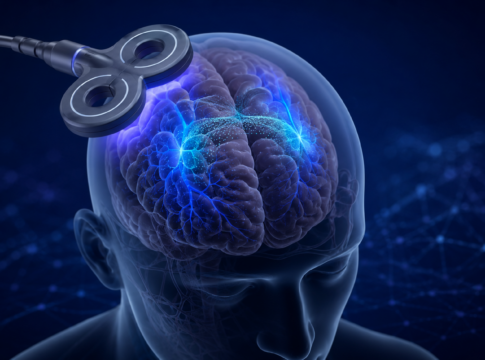
Quand le cerveau s’éteint à l’IRM : un signal plus complexe...
Quand une diminution du signal reste difficile à interpréter
L’imagerie par résonance magnétique fonctionnelle (IRMf) permet de repérer les régions du cerveau qui réagissent...
La connaissance comme récompense
Comparaison de différents types de récompenses
Les participants prennent part à une tâche comprenant trois types de récompenses, de valeur élevée ou faible :
-...
Réseaux cérébraux de la mémoire dans l’épilepsie
Cartographie multimodale des réseaux cérébraux
Combinaison de l'EEG, de l'IRM à champ ultra-élevé et de modèles animaux
Ce projet vise à identifier les marqueurs...