
Abstract Purpose Phosphorus MRS ( 31 P MRS) enables noninvasive assessment of energy metabolism, yet its application is hindered by sensitivity limitations. To overcome this, often high magnetic fields are used, leading to challenges such as spatial inhomogeneity and therefore the need for accurate flip‐angle determination in accelerated acquisitions with short TRs. In response to these challenges, we propose a novel short TR and look‐up table–based double‐angle method for fast 3D 31 P mapping (fDAM). Methods Our method incorporates 3D weighted stack‐of‐spiral gradient‐echo acquisitions and a frequency‐selective pulse to enable efficient mapping based on the phosphocreatine signal at 7 T. Protocols were optimized using simulations and validated through phantom experiments. The method was validated in the human brain using a 31 P 1Ch‐trasmit/32Ch‐receive coil and skeletal muscle using a birdcage 1 H/ 31 P volume coil. Results The results of fDAM were compared with the classical DAM. A good correlation ( r = 0.95) was obtained between the two maps. A 3D 31 P mapping in the human calf muscle was achieved in about 10:50 min using a birdcage volume coil, with a 20% extended coverage (number of voxels with SNR > 3) relative to that of the classical DAM (24 min). fDAM also enabled the first full‐brain coverage 31 P 3D mapping in approximately 10:15 min using a 1Ch‐transmit/32Ch‐receive coil. Conclusion fDAM is an efficient method for 31 P 3D mapping, showing promise for future applications in rapid 31 P MRSI.
Publication scientifique
Fast 3D31 P B1+ mapping with a weighted stack of spiral trajectory at 7 T
Autres publications de la plateforme
Characterising the Diffusion Functional Signature of Negative BOLD With Interleaved TMS...
De Riedmatten, Inès; Spencer, Arthur P. C.; Martuzzi, Roberto; Rochas, Vincent; Pérot, Jean‐Baptiste; Szczepankiewicz, Filip; Jelescu, Ileana O.
Human Brain Mapping
Aberrant cerebrovascular reactivity presents as an early biomarker of psychosis susceptibility...
Delavari, Farnaz; Moia, Stefano; Forrer, Silas; Sandini, Corrado; Kojovic, Nada; Pascucci, Alessandro; Lacour, Clémence; Eliez, Stephan; Van De Ville, Dimitri
Translational Psychiatry
Real-time reinforcement for human-machine interface control
Vassiliadis, Pierre; Pinheiro, Daniel Leal; Fleury, Lisa; Zenon, Alexandre; Esparza-Iaizzo, Martín; Ingster, Abigaïl; Micera, Silvestro; Shokur, Solaiman; Hummel, Friedhelm C.
Neuron
Developmental Alterations in the Diffusion Tensor Imaging Analysis Along the Perivascular...
Pascucci, Alessandro; Forrer, Silas; Sandini, Corrado; Mancini, Valentina; Alemán-Gómez, Yasser; Eliez, Stephan; Delavari, Farnaz
Biological Psychiatry Global Open Science
How Much Does Motion Matter? Evaluating the Motion Robustness of pTx...
Philippe, Jocelyn; Pato Montemayor, Natalia; Romanin, Ludovica; Sleight, Emilie; Klauser, Antoine; Di Noto, Tommaso; Bacha, Lina; Maréchal, Bénédicte; Herrler, Jürgen; Liebig, Patrick A.; Heidemann, Robin M.; Thiran, Jean‐Philippe; Hilbert, Tom; Piredda, Gian Franco; Yu, Thomas
Magnetic Resonance in Medicine
Enhancing SNR in MRI at 7T using wearable coils, dielectric resonators,...
Wenz, Daniel; Vliem, Jules; Shegurova, Elizaveta; Widmaier, Mark; Xin, Lijing; Karampinos, Dimitrios C.; Zivkovic, Irena
Magnetic Resonance Materials in Physics, Biology and Medicine
Journal de publication
Magnetic Resonance in Medicine
Auteurs:
Widmaier, Mark Stephan; Kaiser, Antonia; Baup, Salomé; Wenz, Daniel; Pierzchała, Katarzyna; Xiao, Ying; Huang, Zhiwei; Jiang, Yun; Xin, Lijing
Date de publication:
Plateforme:
Études récentes de la plateforme
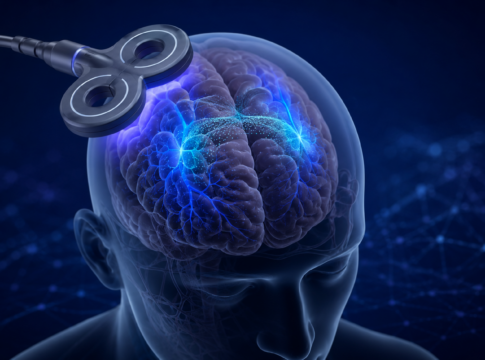
Quand le cerveau s’éteint à l’IRM : un signal plus complexe...
Quand une diminution du signal reste difficile à interpréter
L’imagerie par résonance magnétique fonctionnelle (IRMf) permet de repérer les régions du cerveau qui réagissent...
La connaissance comme récompense
Comparaison de différents types de récompenses
Les participants prennent part à une tâche comprenant trois types de récompenses, de valeur élevée ou faible :
-...
Réseaux cérébraux de la mémoire dans l’épilepsie
Cartographie multimodale des réseaux cérébraux
Combinaison de l'EEG, de l'IRM à champ ultra-élevé et de modèles animaux
Ce projet vise à identifier les marqueurs...